
Blog
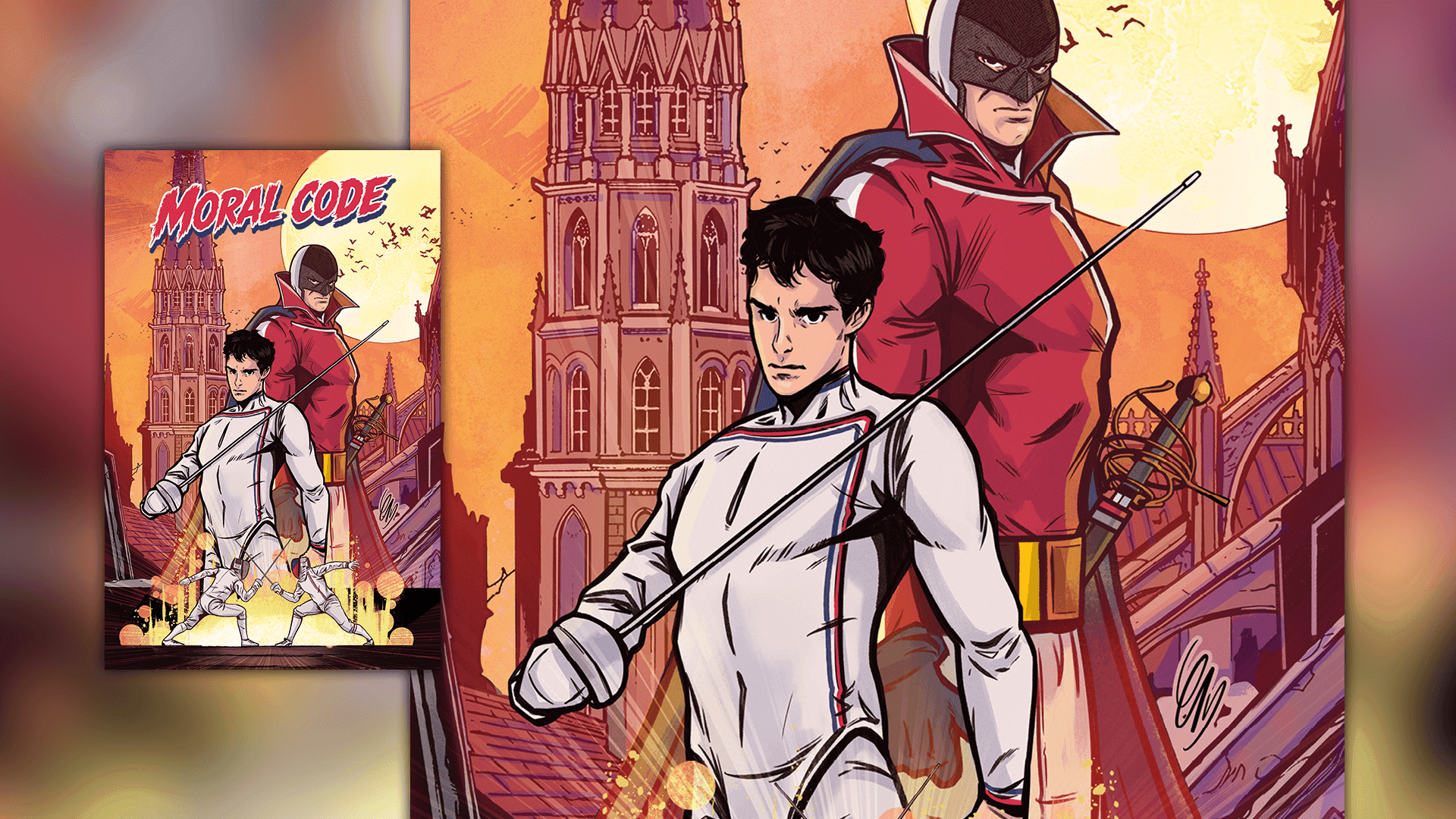
Moral Code: A Conversation With Jiří Beran
A conversation with Olympic fencer Jiří Beran about Moral Code, fair play at Rio 2016, and how one act of honesty became a comic.
At Whaleden, we build around stories that mean something - and few mean as much as this one. Moral Code started with a single act of honesty on an Olympic fencing strip. We sat down with Jiří Beran - two-time Olympian, Paris 2024 bronze medalist, and a name closely associated with fair play - to talk about how it began. Along the way, David Černý of Gamechangers, who first connected us, shares a few words about the introduction that set the project in motion.
Whaleden: Let's start at the beginning. How did fencing become your life?
Jiří Beran: It was always around me. My father was a national-team fencer and later a coach - he founded the SC Praha club, so my sister and I were its first members. I liked the world of fencing from early on: lots of friends, good people around me, and that's still true today. I was never pushed into it at home, and I played plenty of other sports along the way. The decision to focus on fencing and take it further came later, and it was mine - I'm glad I made it. I think that's why it stuck. When you choose something instead of having it imposed on you, it goes deeper.
Whaleden: Most people first heard your name because of Rio in 2016. Take us into that moment.
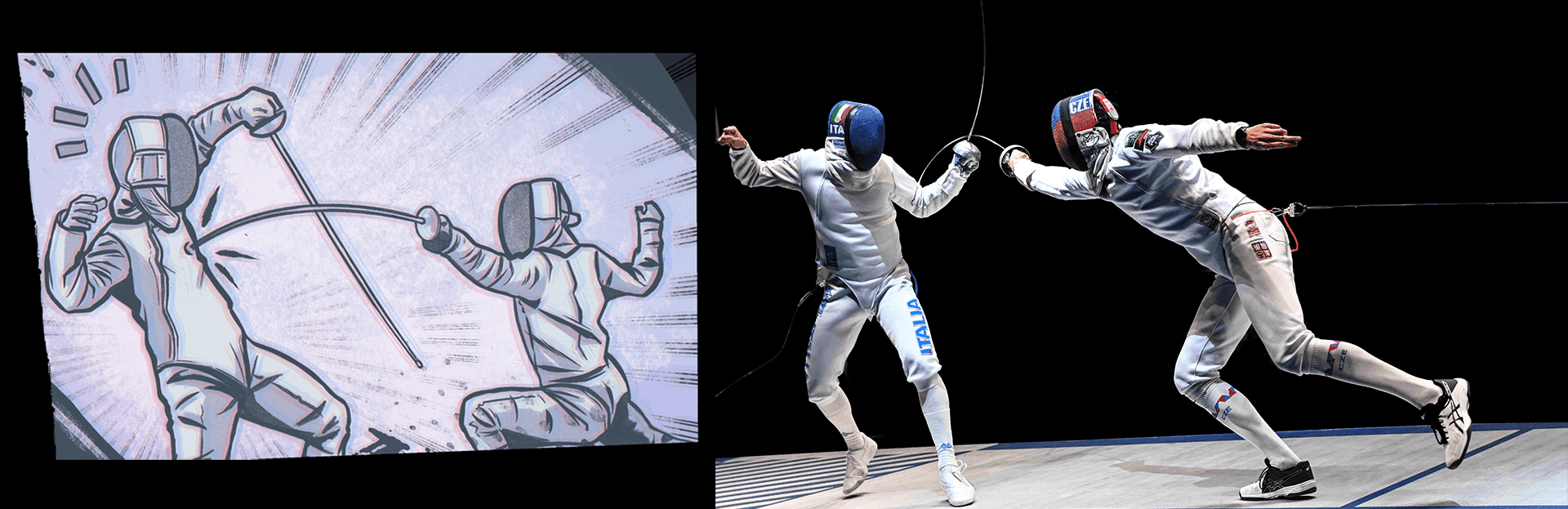
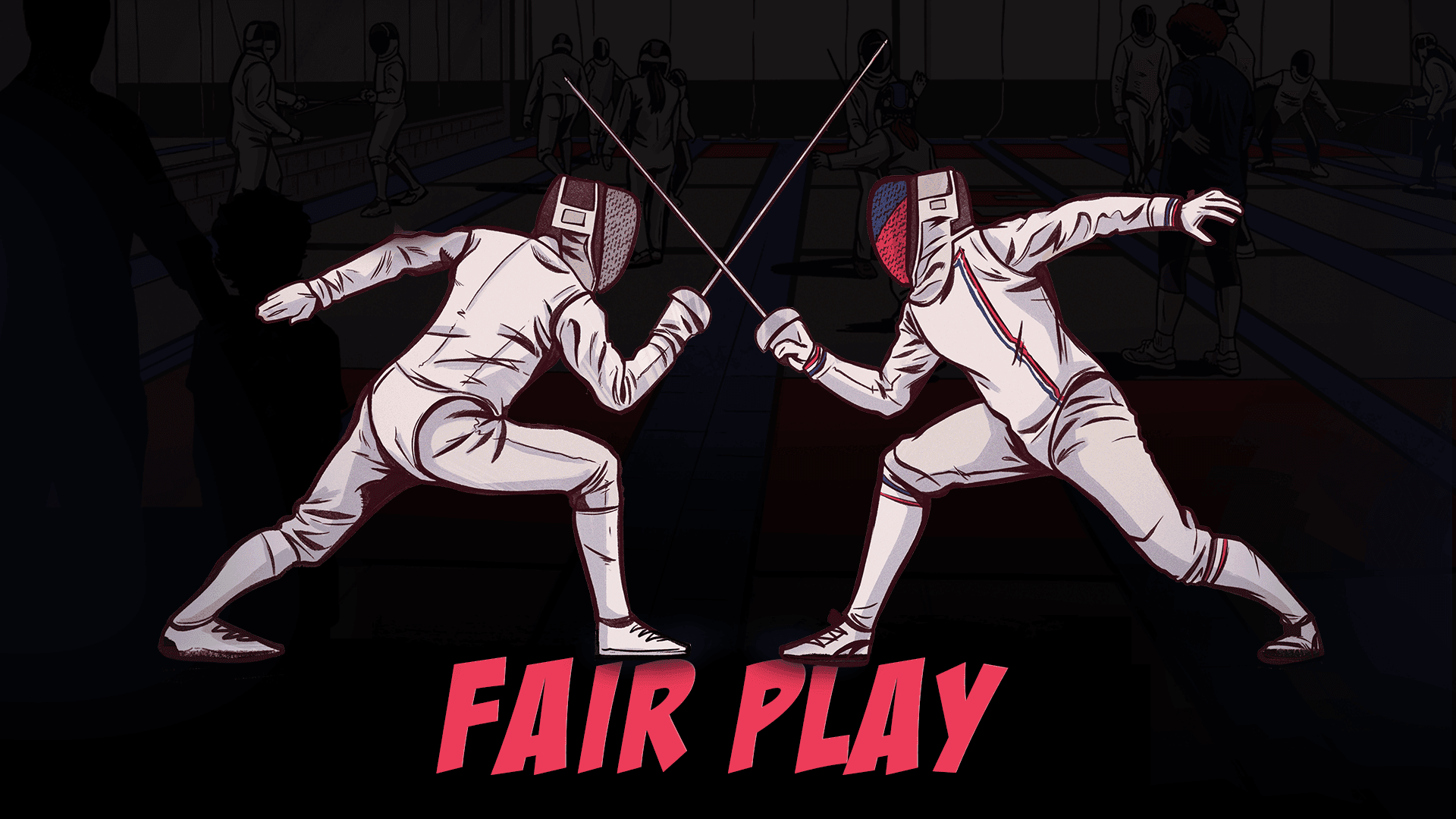
Jiří Beran: It was my first Olympics, a tight bout against a Brazilian in front of his home crowd. The lead kept changing, and with a few seconds left I was down by two points. I scored a hit that the referee accepted - my opponent accepted it too - but I knew it wasn't clean. In close combat I'd actually struck my own leg. I went to the referee to cancel the point. He checked the video, couldn't see it, and wanted to let the hit stand. I insisted it wasn't valid, so he canceled it. There wasn't time to come back, and I lost.
Whaleden: Did you hesitate?
Jiří Beran: No. I've thought about why, though. For me the score was never the whole story. If I'd kept a point I didn't earn, I'd have won the bout and lost something I care about more. Later the International Fencing Federation and the Czech Olympic Committee recognized the gesture, which was humbling. But I didn't do it for that. I did it because playing and living fairly is just normal for me.
Whaleden: You spend a lot of time now with young fencers. What are you trying to pass on?
Jiří Beran: That fairness isn't weakness. Kids sometimes think honesty costs you - that admitting a mistake means losing. I try to show them the opposite: how you compete is part of who you become. I tell them something simple - if you work honestly, with love, and consistently, success comes. Maybe sooner, maybe later, but it comes. That's the work I care most about now.
Whaleden: In Paris 2024 you won team bronze at forty-two - the first Olympic fencing medal in epee for the Czech Republic in over a century. What did that mean to you?
Jiří Beran: It didn't feel like it belonged only to me. Before the Games I went looking for the grave of the fencer who won our country's first medal, back in 1908. I found it neglected, so I looked after it, and I carried a piece of that history with me to Paris. The medal felt like the continuation of something much older than my own career.
Whaleden: Which brings us to a line of yours we keep coming back to.
Jiří Beran: "Real strength is not in the result itself, but in the approach that leads to it." I believe that completely. The result fades. The approach is what you can hand to someone else.
Whaleden: So how did a fencer end up with a comic? Where did Moral Code actually start?
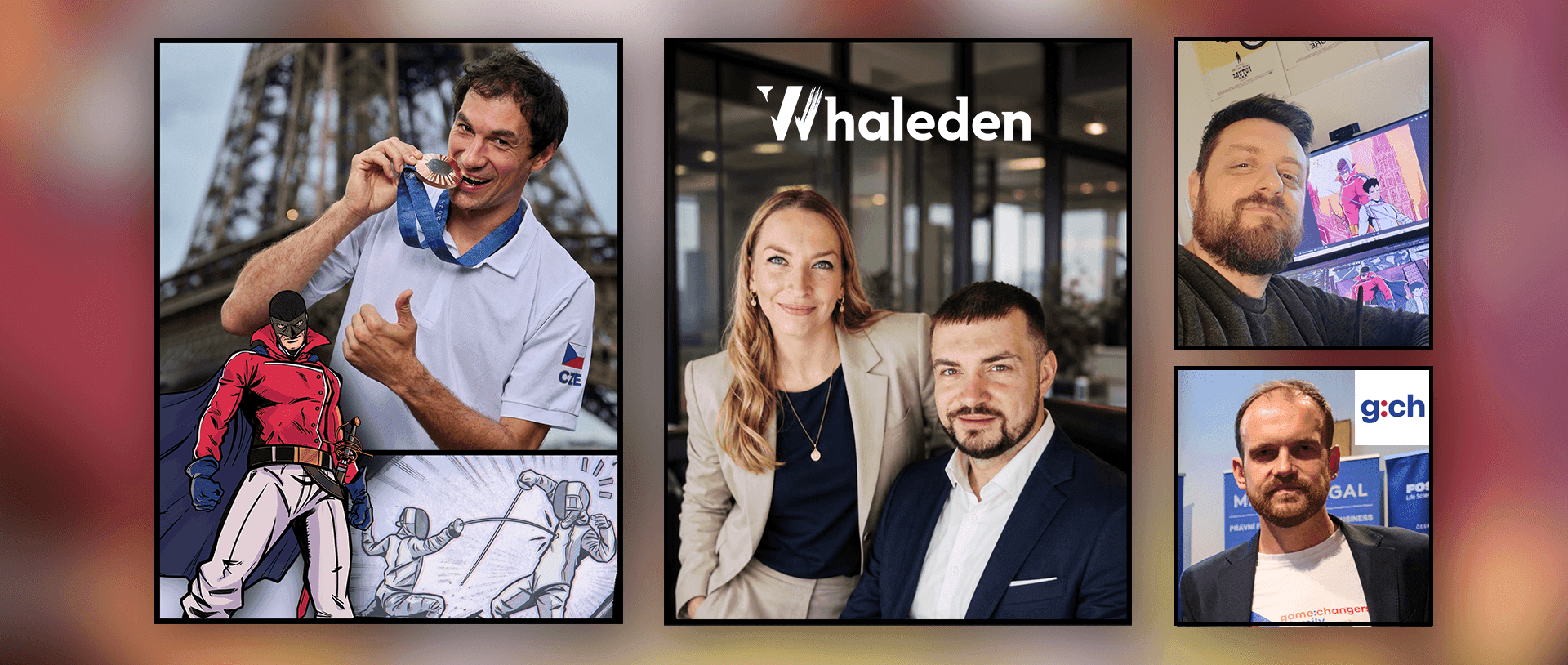
Jiří Beran: Honestly, by accident - the good kind. There's a community in Prague called Gamechangers that connects people from sport and business around shared values rather than deals. Its founder, David Černý, introduced me to the Whaleden team at one of their events, right in the hall where I train. We met again at the launch of my book, and by then it was clear this was more than a chance encounter. They didn't come to me with a marketing idea. They saw that the story was already there - they just offered a way to bring it out.
To understand that introduction, we asked the man who made it - David Černý, founder of Gamechangers.
Whaleden: What is Gamechangers, and what does it stand for?
David Černý: Gamechangers started from a simple belief: the best opportunities rarely come from transactions. They come from relationships, and from shared values. We bring together people from different worlds - athletes, founders, investors, artists, executives - not to sell to each other, but to learn from each other and make connections that wouldn't happen otherwise. That's how Jiří and the Whaleden team met. I knew his story, and I knew what Whaleden was building, so the connection felt natural. What happened after that wasn't my doing - and that's the point. You don't manufacture the outcome. You get the right people in the same room and trust the rest.
Whaleden: Back to you, Jiří - why a comic, of all forms?
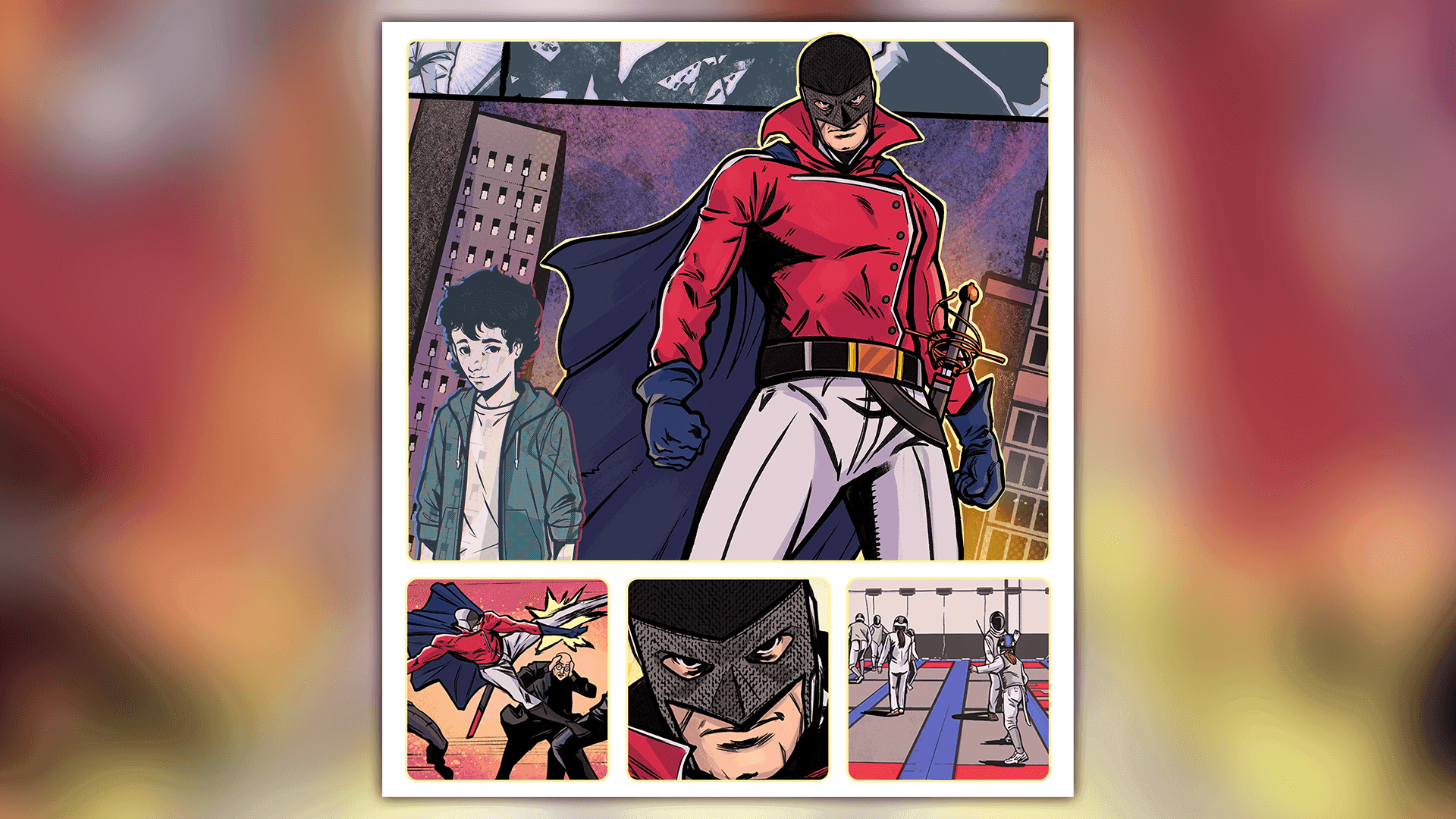
Jiří Beran: Because it reaches the people I most want to reach. A medal goes in a case. A famous gesture lives in old footage that fewer people watch every year. A comic is different - it's visual, so it crosses languages, and it's collectible, so it stays on a shelf. A kid who'd never pick up my biography might pick up a comic about a masked guardian and absorb the same lesson without being lectured.
Whaleden: There's a nice symmetry in who's drawing it.
Jiří Beran: There is, and we didn't plan it. The artist, Ezequiel Di Savino, is from Buenos Aires. That's where I won my first senior World Cup in 2008, and it's also where I met my wife - one of the most important moments of my life. Buenos Aires has always stayed with me. Now the visual voice of my story comes from that same place. Some things are simply meant to fit together..
We turned to the artist himself - Ezequiel Di Savino, drawing from his studio in Buenos Aires - to ask what it was like to bring the story to the page.
Whaleden: What drew you to Moral Code?
Ezequiel Di Savino: A true story is harder to draw than an invented one, and far more rewarding. With a made-up hero you can do anything you want. With Jiří, I had to earn it - to honor a real man and a real moment without turning him into a cartoon. That's exactly what pulled me in. And there was a quiet connection, too: my city, Buenos Aires, is part of his story. Drawing it felt less like a job and more like answering a calling.
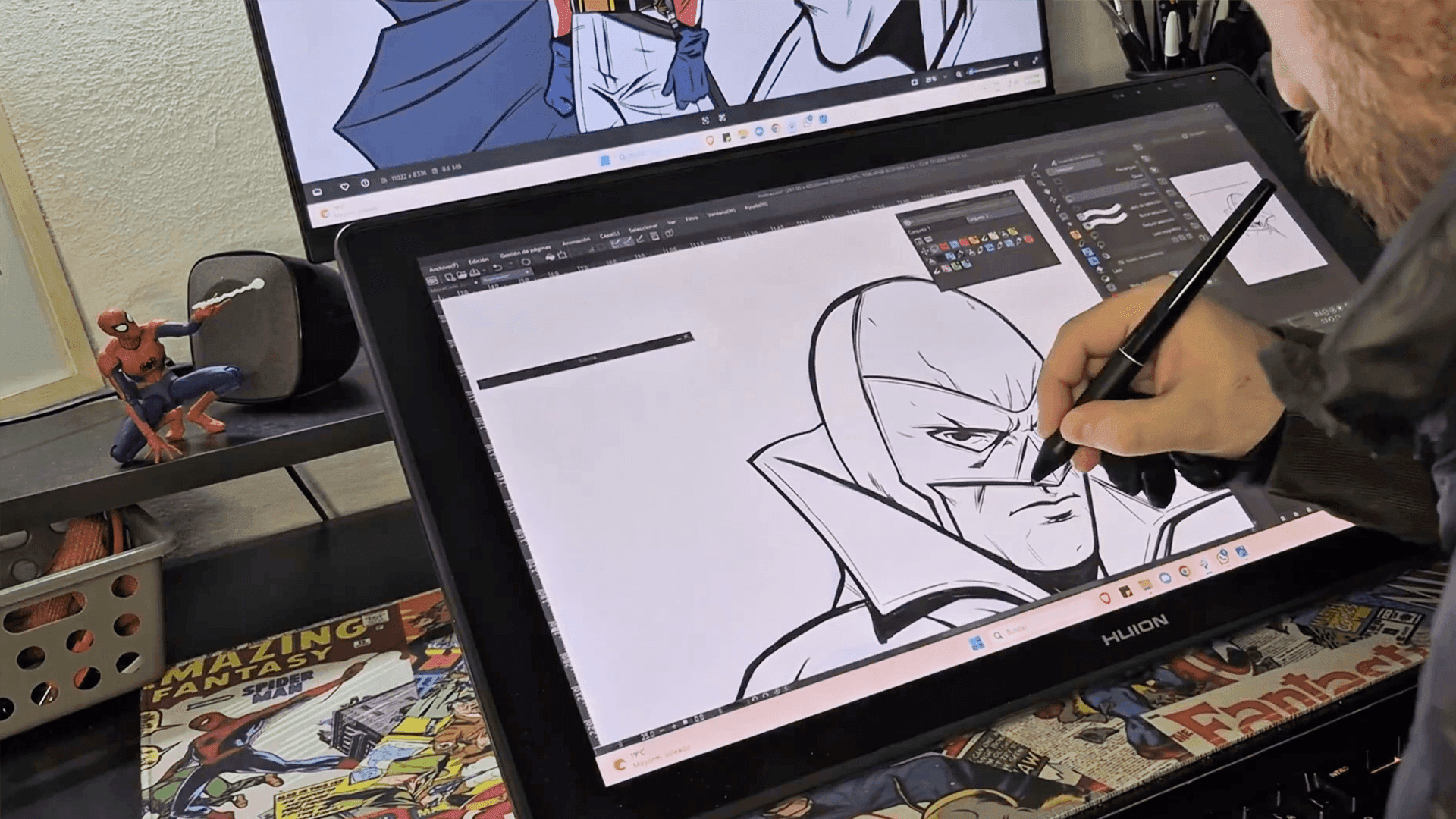
Whaleden: How do you draw something as internal as fair play - a man choosing honesty?
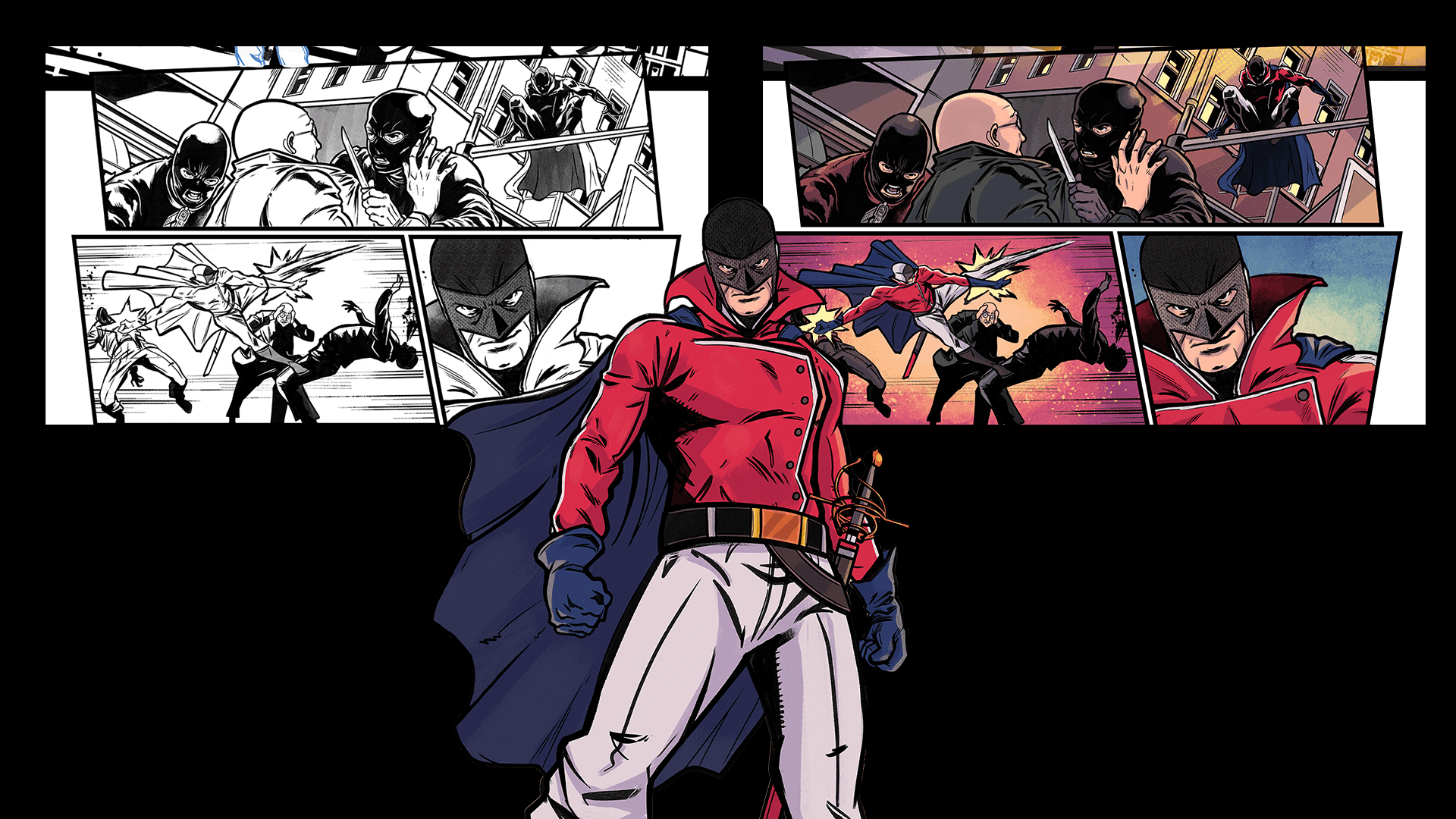
Ezequiel Di Savino: That was the real puzzle. Fencing gives you speed, line, tension - the body almost draws itself. But the decision to give a point away happens in the eyes, in the stillness right after the action. So I work the way film does: kinetic in the fight, then I slow everything down and let the silence carry the weight. The hardest panel isn't the duel. It's the face in the half-second when no one is looking and he chooses to tell the truth. If a reader feels that pause, I've done my job.
Jiří's story found a home at Whaleden. We asked our co-founders, Jan Lochman and Jitka Lochmanová, what that home actually is - and where Moral Code goes next.
Whaleden: For readers meeting us for the first time - what is Whaleden?
Jan Lochman: Whaleden is a platform for building story universes. Good stories can come from anywhere - the hard part isn't the idea, it's turning it into something real and giving it room to grow. We bring the pieces together in one place: creators, artists, fans, funding, publishing. We start with comics, but a comic is just the entry point. It's the foundation a story can build on to reach other formats - movies, games, merchandise - and become lasting intellectual property.
Whaleden: And why was Moral Code a fit?
Jitka Lochmanová: Most people think a story begins when someone sits down to write it. I don't think that's true. The strongest stories exist long before they become comics, books, or films. They start with something real - a choice, a belief, a moment that stays with people. Jiří's story already had that. People were still talking about Rio years later, not for the result but for what it stood for. The comic doesn't create that meaning; it gives it a form. That's what drew us in - not the fencing or the Olympics or even the fair-play award, but the fact that one decision could still make people stop and think years later. When we see a story like that, we don't ask whether it can become a comic. We ask how far it can travel if it's told well.
Whaleden: So what's next for the project?
Jitka Lochmanová: Right now we're focused on making the best possible first issue and getting it to readers through crowdfunding. But like any story we take on, the comic is only the beginning - a first step into telling it visually, and a way for the story to travel into new formats and reach new people. And when I say the story, I don't mean what happened in Rio. I mean the message underneath it - what Jiří really wants to share. We want Moral Code to be something people can pass on to others, and come back to over time. If we do our job well people will remember it as a story about a choice - and what that choice says about who we want to be.
Whaleden: Last question, Jiří - the heart of Moral Code for you?
Jiří Beran: Turning something I've spent my life defending into something the next generation can carry forward. Fair play isn't Czech, and it isn't only about fencing. It's human, and it's teachable. If a single point I gave away in Rio can travel into a comic, and from a comic into a classroom - then it will outlast me. That's the whole point.
Moral Code is inspired by the true story of Jiří Beran, produced by Whaleden, with art by Ezequiel Di Savino - and an origin owed in part to the Gamechangers community and its founder, David Černý. It's the kind of project we exist for: real stories and real values, and the work of helping them last.
Want to follow the story as it's drawn? Watch Moral Code take shape on its project page.
Have a story rooted in something real? Get in touch: [email protected]